
Issue 06 (March 24)
Social and Behavioral Scientists Take to Capitol Hill for COSSA’s Social Science Advocacy Day 2026
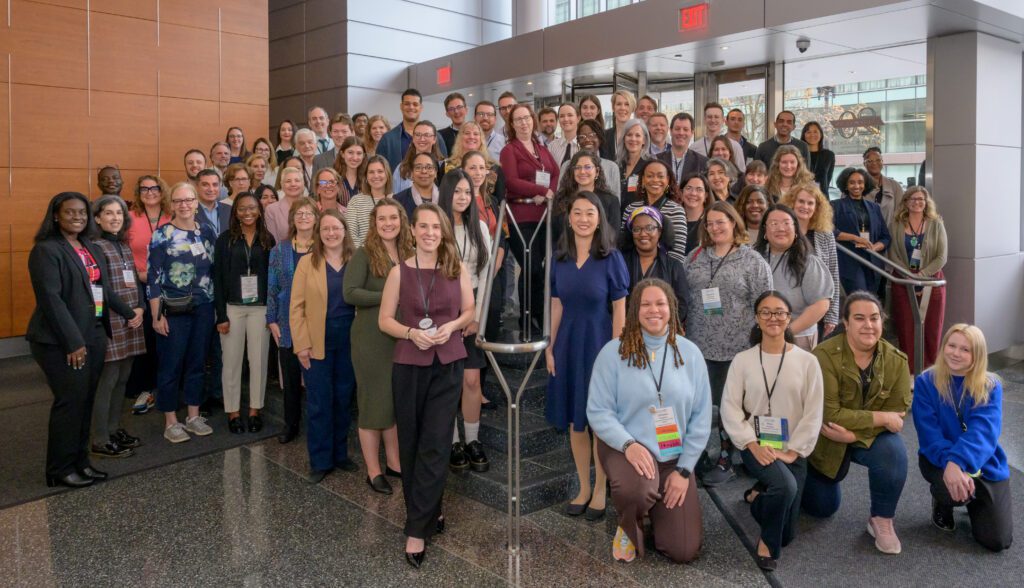
On March 23-24, COSSA held its annual Social Science Advocacy Day in Washington, DC. Over 85 social and behavioral science researchers, students, and advocates from 24 different states headed to Capitol Hill to meet with more than 90 offices in the House of Representatives and Senate, all carrying a message about the need to prioritize funding for social and behavioral science research.
COSSA is especially grateful to the sponsors of this year’s event. Thank you to all involved for making this such an impactful experience and stay tuned for news about Social Science Advocacy Day 2027!
Urge Congress to Prioritize Robust Science Funding in the FY 2027 Appropriations Bills
Congressional appropriators are preparing legislation that will determine funding for federal science and statistical agencies for the next year (FY 2027). With recent attacks on the scientific research enterprise—including funding cuts, grant delays/cancellations, reorganization proposals, abrupt terminations, and mass layoffs— it is essential that our community fights for federal science funding and the scientific workforce. The stakes have never been higher.
Send a message to your Senators and Representative TODAY and tell them why it is critical that they prioritize funding in FY 2027 for the the National Science Foundation, National Institutes of Health, Institute of Education Sciences, National Institute of Justice, Bureau of Justice Statistics, Census Bureau, International Education and Foreign Language Programs, and the federal statistical system.
Register Now: April Headlines Webinar
On April 9, join COSSA for the latest Headlines webinar discussing the proposed changes to the National Science Foundation’s (NSF) Merit Review process. This webinar will feature the National Science Board’s Wanda Ward and will look at what changes to merit review could mean for social and behavioral science research. Register now and join the conversation.
If you missed our March Headlines webinar covering recent policy developments and tips on how to advocate from home, you can find the recording here.
Headlines is a webinar series available to COSSA member organizations. Watch for additional webinar announcements, and previous webinar recordings, on the COSSA website.
Congress Begins FY 2027 Budget Hearings
While Congress continues to grapple with a lapse in funding for the Department of Homeland Security (DHS) and President Trump’s push to pass the SAVE Act (H.R. 22), Congressional appropriators have turned their attention to drafting fiscal year (FY) 2027 appropriations legislation. As previously reported, the House Appropriations Committee set deadlines for submitting funding requests for Members earlier this month. Following in the House’s footsteps, the Senate Appropriations Committee released their guidance last week. Deadlines for each subcommittee’s requests can be found here. Congress has also been holding hearings on budget and policy priorities for various departments and agencies, including the National Institutes of Health (NIH), despite the continued delay of the President’s annual budget request (see related article). It is still unclear when the request will be released; however, Congress is expected to continue moving ahead with the appropriations process regardless of the President’s timeline.
In other news, the House Republicans returned from their annual retreat last week without having reached a consensus on a second reconciliation bill to address the Administration’s request to significantly increase the Department of Defense’s budget. With the upcoming midterm elections, it’s unlikely any reconciliation bill will gain the traction and support it needs to pass the slim Republican majority on Capitol Hill.
Stay tuned to COSSA’s continued coverage on the appropriations process.
House Appropriations Committee Holds NIH Oversight Hearing
On March 17, the House Labor, Health and Human Services, and Education (LHHS) Appropriations Subcommittee held an oversight hearing on the National Institutes of Health (NIH) with testimony from Director Jay Bhattacharya. The hearing comes after Bhattacharya testified in front of the Senate Health, Education, and Labor and Pensions (HELP) Committee in February (see previous coverage).
Bhattacharya, who has also been serving as the Centers for Disease Control and Prevention (CDC) Acting Director since February in addition to his role as NIH Director, fielded questions on a variety of topics, including the Trump Administration’s delays in grant distribution, indirect costs, leadership vacancies and staff reductions, public trust in science, and national security. LHHS Subcommittee Chair Robert Aderholt (R-AL) opened the hearing with comments on the public’s lack of trust in the NIH and encouraged Bhattacharya to continue to prioritize replicability in NIH research, arguing it would help to rebuild public trust in the agency.
On the other side of the aisle, Ranking Member Rosa DeLauro (D-CT) used her opening remarks to raise several concerns about recent actions taken by NIH under the Trump Administration, from unprecedented cancellations of grants and staff reductions to delayed spending of fiscal year (FY) 2026 funding. Ranking Member DeLauro highlighted the detrimental impacts of front-loading payments for multi-year grants, which NIH started doing in FY 2025, which reportedly resulted in 2,000 fewer grants being awarded in 2025.
Ranking Member DeLauro also commented on the White House Office of Management and Budget’s (OMB) delay in releasing FY 2026 funding (see previous coverage), which finally stated happening just prior to the hearing, presumably as a result of pressure from the Subcommittee. “Research is a public good,” she stated. “It must not be manipulated as a political weapon to serve a partisan goal.” While other Congressional Representatives raised similar concerns about the delay of funding, including Rep. Stephanie Bice (R-OK) who later pressed the issue, Bhattacharya claimed that these concerns were “political noise” and that he planned to have all appropriated funds released to researchers in a timely manner.
Rep. Steny Hoyer (D-MD) questioned Bhattacharya on the NIH payline decrease, to which Bhattacharya claimed that, while the payline had decreased to “8 to 10 percent,” it was largely due to an influx of applications prompted by the use of artificial intelligence (AI) to submit applications. Bhattacharya told the Subcommittee that finding a way to reduce AI-generated applications is a priority for the agency. He reiterated a commitment to supporting scientific research and, when prompted by Rep. Hoyer, agreed that “NIH research is the basis of almost every single important biomedical advancement in this century and much of the last century.”
Bhattacharya’s prepared remarks largely centered on NIH going where the “great ideas” are. To this end, the Director suggested separating facility competitions from grant funding to allow smaller universities and colleges more opportunities to receive NIH awards. Further, he pointed to the Trump Administration’s proposal to cap indirect costs at 15 percent as another way to improve competitive fairness between institutions (see previous coverage).
The hearing later moved to concerns about the agency’s ability to operate without permanent institute directors in place. In response, Bhattacharya indicated that the agency has plans to onboard new institute directors in the upcoming months to fill those leadership gaps in addition to plans to restore some of their lost staff, many of which were unexpectedly terminated in mass layoffs last year (see previous coverage). Ranking Member DeLauro also expressed uncertainty over Bhattacharya’s ability to serve as both the NIH Director and CDC Acting Director. It’s unclear whether the Administration intends to nominate a new CDC Director anytime soon.
Lastly, Bhattacharya fielded questions about national security and protecting U.S. federally-funded scientific research. He acknowledged concerns, specifically relating to the Chinese Communist Party (CCP), and stated that he was in the process of developing a framework to address these concerns with the White House Office of Science and Technology Policy (OSTP). Further, he argued that universities needed stronger policies to protect research from foreign interference. While he stated that the NIH doesn’t “want burdensome regulations to stop research,” he stated that improving oversight was a major priority for the Administration.
A full recording of the hearing can be viewed here. Stay tuned for COSSA’s continued coverage of the NIH.
Submit and Register for the Data Foundation’s Genesis Mission Virtual Forum
Join the Data Foundation for a dynamic virtual forum focused on the Genesis Mission Executive Order. The Order establishes a sweeping national initiative to accelerate AI-driven scientific discovery through the creation of the American Science and Security Platform. This public forum invites researchers, policy experts, technologists, advocates, university research leaders, and federal partners to examine the Order’s immediate implications for university-federal research collaborations, particularly workforce pathways that will shape how higher education institutions engage with this initiative, and the new partnerships and data governance frameworks may be necessary. The forum will aim to educate and garner actionable insights for university and nonprofit leaders for promising approaches to implement the requirements of the Order.
Submit an abstract, attend, or share with your networks. The Data Foundation is calling for presenters to give short presentations and engage in in-depth discussions and learning. Send in your submissions by April 6, 2026.
The Data Foundation is accepting speaker submissions on key topics including:
- Research-to-Workforce Pathways
- Partnership Structures & Intellectual Property
- New Data Governance Frameworks for Non-Federal Collaborators
- Data Standardization, Metadata, & Provenance Requirements
- Access, Vetting, & Authorization Procedures